Coastal Landscape Design in Gloucester & Middlesex: What Waterfront Homeowners Need to Know in 2026
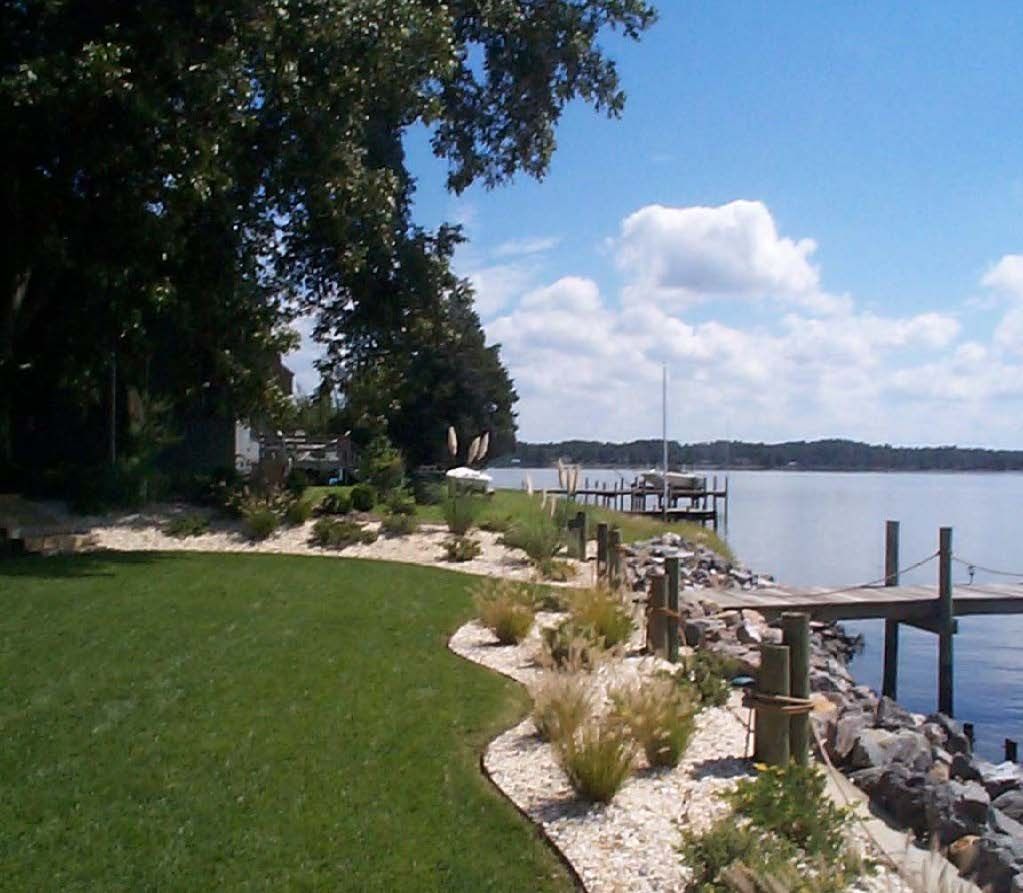
Waterfront homeowners along the York River, Piankatank River, and surrounding tidal waterways in Gloucester County, VA, and Middlesex County, VA, face a unique set of challenges when it comes to landscape design in Gloucester & Middlesex. This guide covers what those homeowners need to know in 2026, including plant selection, erosion control, permits, and why contractor choice matters.
Why Coastal Properties Need a Different Design Approach
Waterfront properties in this region demand a specialized plan from day one. Effective landscape design must account for salt air, tidal fluctuation, periodic flooding, and saturated soils that make standard residential landscaping a poor fit for homes along the York River near Gloucester Point or the Piankatank River in communities like Deltaville and Hartfield.
Salt spray can travel far inland. Plants that thrive in ordinary Virginia gardens may struggle or fail entirely within a few hundred feet of a tidal shoreline, making plant selection one of the most critical early decisions in any coastal landscape plan.
What Plants Work Best on Waterfront Properties in This Region?
Salt-tolerant native species are typically the most reliable choice for tidal properties.
Several plants perform consistently well along Virginia's Middle Peninsula shorelines:
- Wax Myrtle (Myrica cerifera) tolerates salt, sandy soils, and coastal winds and works as a dense privacy screen when pruned regularly.
- Eastern Red Cedar (Juniperus virginiana) is wind-resistant, thrives in sandy soils, and provides year-round coverage.
- Sweetbay Magnolia (Magnolia virginiana) offers a salt-tolerant, compact alternative to traditional magnolias, with white blooms in late spring.
- Little Bluestem (Schizachyrium scoparium) is a native ornamental grass with strong drought tolerance suited to dry, sandy coastal soils.
- Common Rush (Juncus effusus) and similar marsh-edge grasses help stabilize the transition zone between upland lawns and tidal margins.
Native plants bind soil, reduce runoff, and slow wave energy along the shoreline, offering meaningful protection during summer storms and tropical weather events on the York River and Piankatank. Plant selection is central to any successful coastal planting plan.
Erosion Control Strategies for Gloucester and Middlesex Shorelines
Erosion control is a central concern for any waterfront landscape design.
Appropriate approaches depend on site conditions:
- Vegetated buffers using native grasses and shrubs absorb wave energy and stabilize sandy shoreline soils.
- Riprap placed along the waterline slows wave action and reduces bank undercutting.
- Bulkheads and seawalls create a hard barrier suitable for properties with severe erosion or limited space for vegetated solutions.
- Living shorelines combine planted marsh fringe with low-profile sill structures for long-term stability while preserving natural shoreline character.
Properties along calmer tidal creeks near Saluda or Mathews may call for lighter approaches than properties on open water.
Permit Requirements Waterfront Homeowners Should Know
Permits are a non-negotiable part of shoreline and landscape work in both counties. Any activity in or adjacent to tidal wetlands in Gloucester County, VA, or Middlesex County, VA, may require a Joint Permit Application (JPA) submitted to the Virginia Marine Resources Commission (VMRC).
In Gloucester County, activities within tidal wetlands require a public hearing and board approval before work begins. In Middlesex County, the Planning and Zoning Department enforces the Chesapeake Bay Preservation Act alongside the Erosion and Sediment Control Ordinance. Land disturbance over 2,500 square feet within a Chesapeake Bay Preservation Area may require an erosion and sediment control permit.
The Virginia DEQ's Chesapeake Bay Preservation Act establishes Resource Protection Areas (RPAs) around tidal wetlands, typically creating a 100-foot buffer where disturbance is restricted. Working inside an RPA without permits can result in stop-work orders, mandatory restoration, and fines. A contractor experienced with shoreline work in both counties will typically know these requirements and help homeowners navigate them before work begins.
Do I Need a Permit to Plant Along My Shoreline?
Planting within your upland yard typically does not trigger a permit. However, any grading, filling, or planting within a tidal wetland or the RPA buffer may require approval. A contractor familiar with local regulations can help identify those boundaries before work begins.
What Is a Design-Build Contractor and Why Does It Matter for Waterfront Work?
A design-build contractor handles both planning and physical construction under one team. For waterfront properties in Gloucester and Middlesex Counties, this means permits, grading, plant installation, hardscaping, erosion control, and marine construction elements like bulkheads and piers can all be coordinated together, reducing scheduling gaps and keeping projects moving efficiently.
How Is Coastal Design Different from Standard Residential Landscaping?
Coastal design on tidal property accounts for salt exposure, tidal flooding, poor sandy soils, RPA buffer regulations, and shoreline stabilization. The plant palette, grading strategy, drainage approach, and permit process are all meaningfully different for properties along tidal waterways like the York River or Piankatank.
Working With a Design-Build Firm Serving Gloucester and Middlesex
A contractor who understands both design and construction reality for coastal Virginia properties can significantly improve outcomes. Thoughtful landscape design requires a firm that can handle ornamental planting, erosion control, hardscaping, and marine elements under one roof. Confirm Virginia Class A contractor licensing, which reflects the scope of work a firm is authorized to perform.
Start Your 2026 Waterfront Landscape Project on the Right Foot
Southern Landscaping Construction, Inc. has over 35 years of experience in landscaping and marine construction across the Middle Peninsula, serving communities along the York River, the Piankatank, and beyond. As a Class A contractor, the team handles design, permitting, installation, erosion control, and marine construction together. Visit the landscape design page or reach out for a free estimate.
Find
Southern Landscaping Construction, Inc. on Google to read reviews and explore the full range of services.